
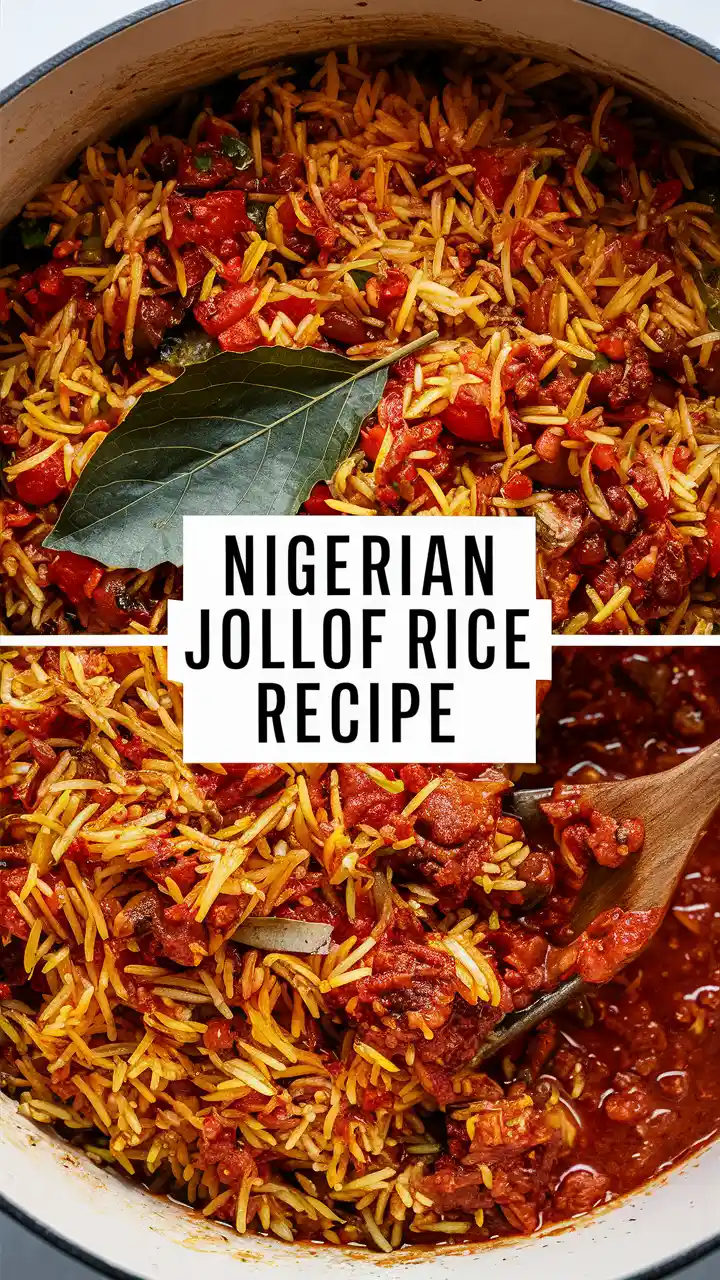
Nigerian Jollof Rice is not just a meal — it is a shared memory, a celebration dish, and a symbol of togetherness. From lively weddings and birthday parties to quiet Sunday lunches, this iconic one-pot rice holds a permanent place at the Nigerian table. What makes it unforgettable is the harmony of flavour: a rich pepper-tomato base, aromatic spices, perfectly cooked long-grain rice, and a subtle smoky depth that lingers long after the last bite.
This guide goes beyond a basic recipe. It explains the science, technique, and cultural logic behind truly excellent Nigerian Jollof Rice, so you can cook it confidently anywhere in the world.
Recipe Overview (Quick Facts)
- Cuisine: Nigerian / West African
- Course: Main Dish
- Difficulty: Intermediate
- Servings: 8–10
- Prep Time: 35 minutes
- Cook Time: 70 minutes
- Total Time: ~1 hour 45 minutes
- Calories: ~480–580 per serving (estimate)
Why Nigerian Jollof Rice Is Different
Nigerian Jollof stands out for three defining characteristics:
- Long-grain parboiled rice that stays firm and separate
- A well-fried pepper base (Obe Ata) with reduced moisture
- Controlled steaming, not boiling, for even flavour absorption
Unlike other regional styles, Nigerian Jollof prioritizes bold flavour concentration and often includes a desirable smoky undertone known as Party Jollof.
Ingredients for Authentic Nigerian Jollof Rice
Pepper Base (Obe Ata)
- 4 large ripe plum tomatoes (or 400 g canned plum tomatoes)
- 2 large red bell peppers (tatashe)
- 1–2 Scotch bonnet peppers (adjust to heat preference)
- 1 large onion
For Cooking
- ½ cup vegetable or groundnut oil
- 1 large onion, finely sliced
- 3–4 tbsp double-concentrated tomato paste
- 4 cups long-grain parboiled rice
- 5–6 cups hot chicken or beef stock
- 2 tbsp Nigerian curry powder
- 1 tbsp dried thyme
- 2–3 bay leaves
- 2 seasoning cubes (adjust to taste)
- Salt as needed
Optional Enhancers
- 2 cloves garlic, minced
- 1 tsp grated ginger
- 1–2 tbsp butter (added at the end)
Essential Equipment
- Heavy-bottomed pot or Dutch oven
- Blender
- Fine colander
- Tight-fitting lid (foil recommended for sealing)
Step-by-Step Cooking Instructions
1. Prepare and Reduce the Pepper Base
Blend tomatoes, bell peppers, Scotch bonnet, and onion with minimal water until smooth. Transfer to a pot and boil uncovered for 20–25 minutes, stirring occasionally, until thick and reduced. This removes raw acidity and excess moisture.
2. Parboil the Rice (Critical Step)
Wash rice thoroughly until water runs mostly clear. Boil in plenty of water for 5–7 minutes until slightly swollen but firm. Drain immediately and rinse with cold water. Set aside.
3. Build the Jollof Sauce
Heat oil in a large pot over medium heat. Add sliced onions (plus garlic/ginger if using) and sauté until soft. Stir in tomato paste and fry for 5–7 minutes until deep brick-red.
Add reduced pepper base, curry powder, thyme, bay leaves, seasoning cubes, and a pinch of salt. Fry for 10–15 minutes, stirring often, until oil separates slightly from the sauce.
4. Combine Rice and Stock
Add parboiled rice and stir gently to coat every grain. Pour in hot stock until it just covers the rice. Taste and adjust seasoning.
5. Steam, Don’t Stir
Bring to a gentle simmer, cover tightly (foil + lid), and reduce heat to the lowest setting. Steam undisturbed for 20 minutes.
Check once: if rice is still firm and dry, add ¼ cup hot stock around edges. Cover and steam another 10–20 minutes until tender.
6. Optional Smoky Finish (Party Jollof)
In the final 5–10 minutes, slightly increase heat to allow light caramelization at the bottom. Do not stir.
7. Rest and Serve
Turn off heat, stir in butter if using, cover, and rest for 10–15 minutes. Fluff gently before serving.
The Science Behind Perfect Jollof Rice
- Parboiled rice resists over-hydration due to gelatinized starch
- Oil separation signals moisture evaporation and flavour concentration
- Low-heat steaming preserves grain integrity
- Smoky notes come from controlled Maillard reactions at the pot base
Understanding this prevents mushy or bland results.
Common Problems & Professional Fixes
| Issue | Cause | Solution |
|---|---|---|
| Mushy rice | Excess liquid | Reduce stock, steam longer |
| Pale colour | Under-fried paste | Fry paste until dark |
| Bitter taste | Burnt base | Lower heat, stir frequently |
| Uneven cooking | Lid opened too often | Seal pot tightly |
Ingredient Substitutions (Global Access)
| Nigerian Ingredient | Substitute |
|---|---|
| Tatashe | Red bell pepper |
| Ata rodo | Habanero |
| Maggi cubes | Bouillon cubes |
| Groundnut oil | Sunflower or canola oil |
Serving Suggestions
- Fried plantain (dodo)
- Grilled or fried chicken
- Beef or goat stew
- Moin moin
- Fresh salad or coleslaw
Storage & Reheating
- Refrigerate: Up to 4 days
- Freeze: Up to 3 months in airtight containers
- Reheat: Add a splash of stock or water; heat gently
Frequently Asked Questions
Is Nigerian Jollof Rice spicy?
It can be mild or hot depending on Scotch bonnet quantity.
Can I make it vegetarian?
Yes. Use vegetable stock and plant-based seasoning.
Why does party Jollof taste different?
Firewood cooking and bottom-pot caramelization add smokiness.
Final Thoughts
Nigerian Jollof Rice is a balance of technique, patience, and respect for process. When cooked correctly, it delivers bold flavour, beautiful colour, and a texture that defines excellence. This recipe is designed to work reliably in modern kitchens while staying true to tradition.